2 3/4 INCH POTS $18 Sorry, Sold Out
| Articles | Home Page | Images | Order Form | Plant Catalog |
Prunus (Cherries, Plums, Almond, Apricot) S\M\-30ø\Ls\B Evergreen and deciduous trees and shrubs. A huge genus of well known and often used plants. Nearly all Prunus prefer full sun, well drained loose soils and moist but not wet soil in summer. Nearly all are cold hardy to -30F. When a Prunus species does not conform to this description it will be mentioned. We are interested in the flowering and ornamental species that make excellent landscape plants as well as bonsai. To simplify matters, and to make comparisons, we have grouped the Prunus species into Flowering Cherries, Flowering Plums, and Flowering Apricot followed by the other species that do not fit into these groups. In order to do this we must forego alphabetical order for Prunus.
All of our Prunus are cutting grown. Cutting grown plants means that you get plants that are ready to flower the spring following their arrival. It also eliminates the ugly grafts prevalent for Prunus species. Lastly, small cutting grown plants provide you with 'true to name' cultivars at very low prices.
Prunus is a traditional genus for bonsai. The early spring flowers on naked stems have been cherished in Asia for centuries. Most people try to make bonsai from plants that are too small. A few species will make mame bonsai such as P. subhirtella X 'Hally Jolivette', but most are suitable only for larger bonsai, which will require years of growing out and multiple trunk chops to obtain taper and movement. Most Prunus tend to grow with cylindrical trunks with little or no taper. Cutting back the trunk repeatedly over a number of years is needed to correct this.
Prunus almost universally suffer from winter and spring fungal diseases and should be treated like fruiting trees. A fixed copper dormant spray several times a winter will protect most species. Most are also subject to late spring freeze damage. They should not be allowed to freeze once they begin to flower.
FLOWERING CHERRY
Cold hardy to -30ø, but due to severe dieback better suited to areas that
only reach -10ø. Prune only to shape plants, be careful to choose species
that will not outgrow their site. Pruning to control size in the landscape
is an endless battle and will diminish the number of blooms. Flowering
Cherries are notorious for forming bad graft unions that become unsightly
with age and are also sources for infection and insect infestation. To
avoid this, our plants are cutting grown whenever possible. Smaller leaf
types make excellent bonsai. Weeping forms such as 'Pendula' make
beautiful cascade bonsai. In bonsai situations many will rebloom in the
fall as a result of summer pruning. The spectacular flowers of the larger
leaf forms make them tempting for bonsai, but they will only be suitable
for larger (3 to 4 foot) bonsai.
| 7575 Prunus campanulata x incisa 'Okame'-10ø
25 feet x 20 feet upright vigorous tree. Dark green foliage,
single pink flowers in early spring. Purple, red and orange fall
color. The small flowers and twiggy branching of this cultivar
make it very desirable for bonsai. It also has smooth deep purple
'cherry bark'. This cultivar is quite disease resistant. 2 3/4 INCH POTS $18 Sorry, Sold Out |
|
7590 Prunus incisa 'Midori' (Fuji Cherry,
Mame-zakura) Small shrubby tree, almost prostrate, somewhat smaller than
the species. Gray bark, small 2 inch leaves, single pink flowers in early
spring, followed by small purple black cherries. The very twiggy branching
and slow growth of this Cherry makes it excellent material for bonsai.
This cultivar is quite disease resistant.
2 3/4 INCH POTS $18 Sorry, Sold Out
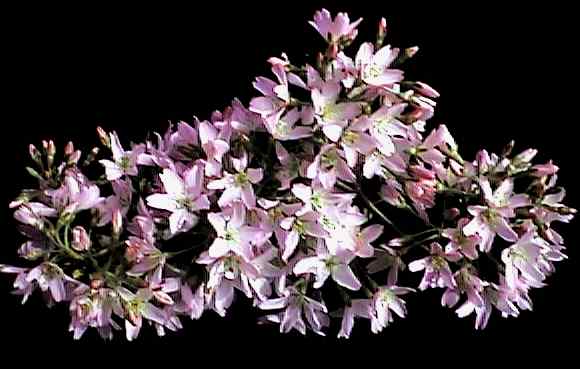
| 7600 Prunus serrulata 'Beni Hoshi' (Pink
Star) 20 feet x 20 feet with long arching branches to form an
umbrella shape. Multitudes of single pink flowers with twisted
petals hang below the branches, blooms mid-season. Vigorous and
fast growing. The leaves are about 3 inches but will reduce
somewhat in bonsai culture, still they should be used for larger
bonsai. This cultivar suffers from fungal diseases in cold wet
spring weather and must be sprayed. ONE GALLON SIZE $45 Sorry, Sold Out |
 |
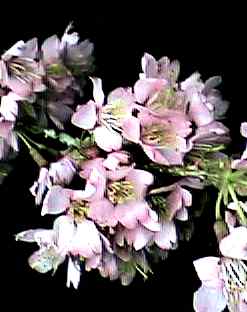
7650 Prunus subhirtella 'Autumnalis' 25 foot
x 25 foot open branching shrubby tree with a flattened crown. Small pale
pink to white double flowers in spring and again in the fall, although not
as profuse in autumn. Some flowers may appear during warm winter spells.
The small leaves and fine branching make this an excellent choice for
flowering bonsai. Little or no fruit.
2 3/4 INCH POTS $18 Sorry, Sold Out
7655 Prunus subhirtella x yedoensis 'Hally Jolivette' A
small rounded shrubby tree to 12 feet eventually. Flowers are small and
double pink, blooms for three weeks. The plant is densely branched and has
small leaves. New stems are reddish. One of th very best cultivars for
small bonsai.
2 3/4 INCH POTS $18 Sorry,
Sold Out
7657 Prunus subhirtella 'Pendula'A more
vigorous weeping cherry. . The branches form perfect weeping arches when
staked up. White flowers, no fruit. Better for larger bonsai.
2 3/4 INCH POTS $18 Sorry, Sold Out
FLOWERING PLUM
The description above for Flowering Cherry also applies to Flowering Plums
with the additional precaution that fruits can be a problem and that plums
in general are even faster growing and more likely to outgrow their site
if not chosen carefully. Plums should be treated in winter with dormant
sprays and pruned 'inside out', that is they should not be headed back
which will only encourage their bad habit of forming crossing branches in
the center of the tree. These crossing branches should be pruned out to
open the center of the tree and create a canopy of foliage on the outer
branches. For bonsai, most are only suitable for larger bonsai. In areas
of cold wet spring weather, do not prune until warmer, drier weather after
the first leaves have hardened off to avoid fungal diseases entering
pruning cuts.
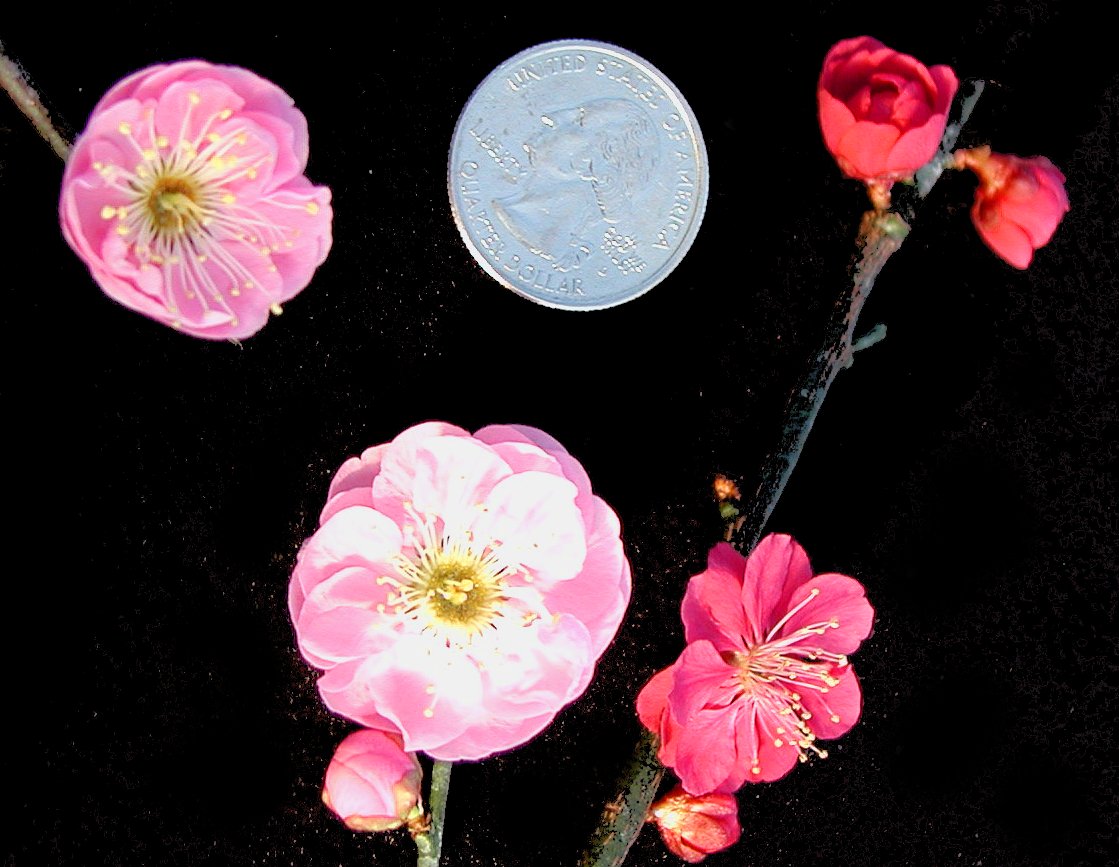
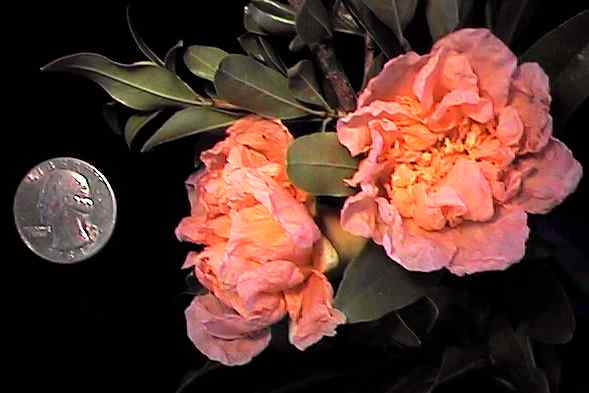
Mume flowers: (clockwise from quarter) 'Hokkai Bungo', 'Bonita', 'Dawn'
FLOWERING APRICOT
Prunus mume has been popular in China and
Japan for over a thousand years and is now becoming very popular in the
U.S. It is the longest lived of the flowering fruit species. It flowers
very early in the season, January in mild areas and Feb-March in colder
areas. The flowers may be single or double, either pink, white, or red
(depending on the cultivar)and are fragrant with a strong spicy cinnamon
scent. The flowers are borne along the length of new green stem growth
which can reach 6 feet or more in a single season. The tree will form a
multitude of apricot-like fruits that are edible, but quite sour. The
leaves are a glossy deep green. Pruning may take place while the tree is
in bloom and the branches brought into the house. The tree will ultimately
reach 20 feet and will eventually develop black gnarly bark and an ancient
rugged character. Grafts are problematic; all our cultivars are cutting
grown. A traditional bonsai tree. You should plan on growing out mume for
large trunks; they do not make very good small bonsai. Fortunately they
grow very quickly. You can obtain a four to six inch trunk in as many
years if you plant them in the ground. For more information on obtaining
large trunks for bonsai see the article on
Developing Large Trunks for Bonsai.
Growing mume is problematic for many people including us.
Unfortunately, mume are very difficult for us to grow from cuttings.
They like cool humid summer temperatures, and our weather is hot semi
arid, the polar opposite. The challenge is enormous, and we will have to
take off several years to rethink how to do this. We will keep the
descriptive part of the catalog intact, but will not list prices or
availability until we actually have plants to sell. This will avoid the
confusion and disappointment. So, please do not request mume until they
are actually listed, we will not have any.
The basic problem of growing mume is that they are very susceptible to
spring freezes. Their early flowering means that they are active very
early in the spring. Any hard freeze after flowering begins induces small
freeze damage cracks along the branches that are invaded by spring fungal
diseases. Often these diseases are fatal to the tree, but if not fatal,
large branches can be lost. We now have a large greenhouse that will allow
us to overwinter a few stock plants to experiment on. Mume will perform
best in areas that are mild in winter, and that once warm, stay warm
without spring frost danger. Dry weather in spring also helps with the
control of fungal diseases. Some disease control is possible with
fungicides, especially fixed copper, but repeated applications will be
necessary. Fortunately, mume grow quite well in containers with frequent
repotting and this allows them to be moved into a protected area
temporarily in spring. An overwintering cold greenhouse is ideal for them,
such as a covered porch or traditional greenhouse.
All the deep red flowering mume are weak growers and prone to disease. Grow them at your own risk. Fungicide spraying and extraordinary care is a must. A good substitute for red mume is 'Hokkai Bungo' which is almost a pure red and a strong grower. A few mume are currently available and we are propagating more this year. We hope to have more cultivars available Fall 2023.
|
7740 Prunus mume species
[cuttings] This is the unadultered species of Prunus mume. Medium
size single flowers of off white with a distinctive red calyx.
These are cutting grown plants from mature flowering wood, so they
are capable of flowering in a year or two. The flowers are
slightly fragrant of cinnamon. |
 |
|
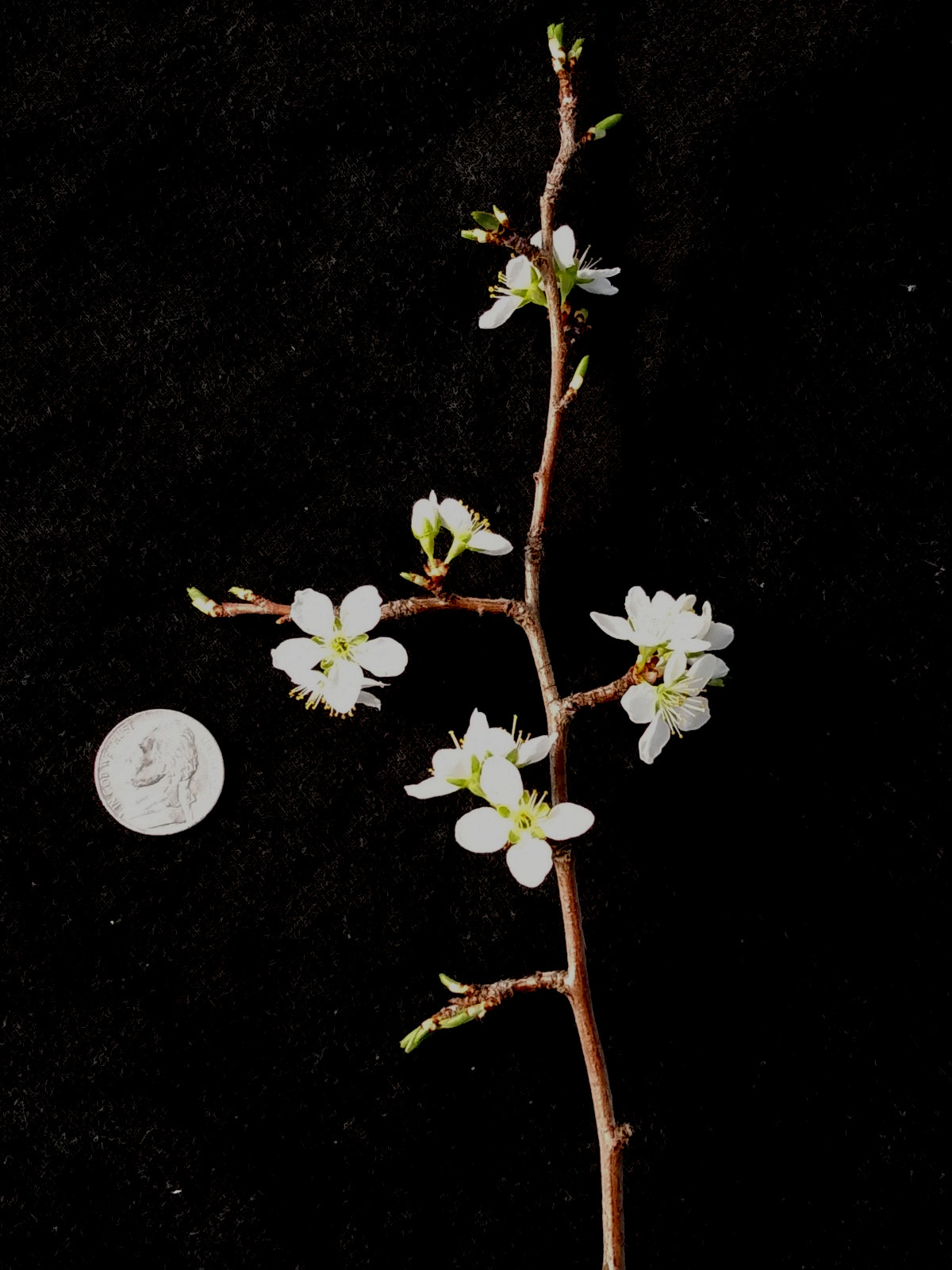
7742 Prunus mume x [cuttings] This
little mume hybrid is the result of the open pollination of 'WB
Clarke'. It formed dozens of fruit one year and about a half dozen
of the seeds sprouted around the 'WB Clarke' tree. The other
parent is most likely a native white flowered plum This should be
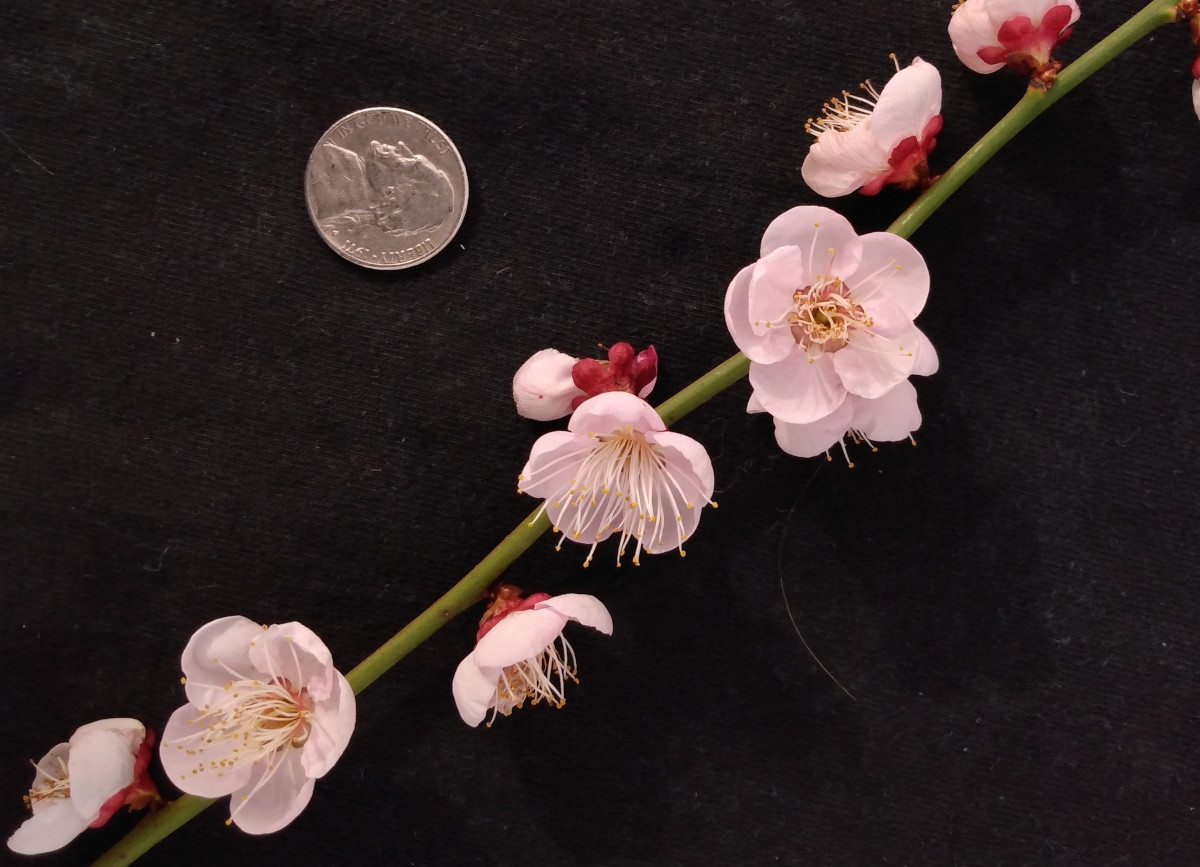
an excellent plant for bonsai. In early April the small single
white flowers form on small spurs as seen in the photo. It has a
slight fragrance, but not the distinctive cinnamon smell of mume.
The branching is small and delicate, but it is a vigorous grower.
A nickel is placed next to it for scale. It is a tough disease
resistant plant. These are cutting grown plants from mature
flowering wood, so they are capable of flowering in a year or two.
Beautiful multi colored fall foliage. FOUR INCH POTS $45 |
 |
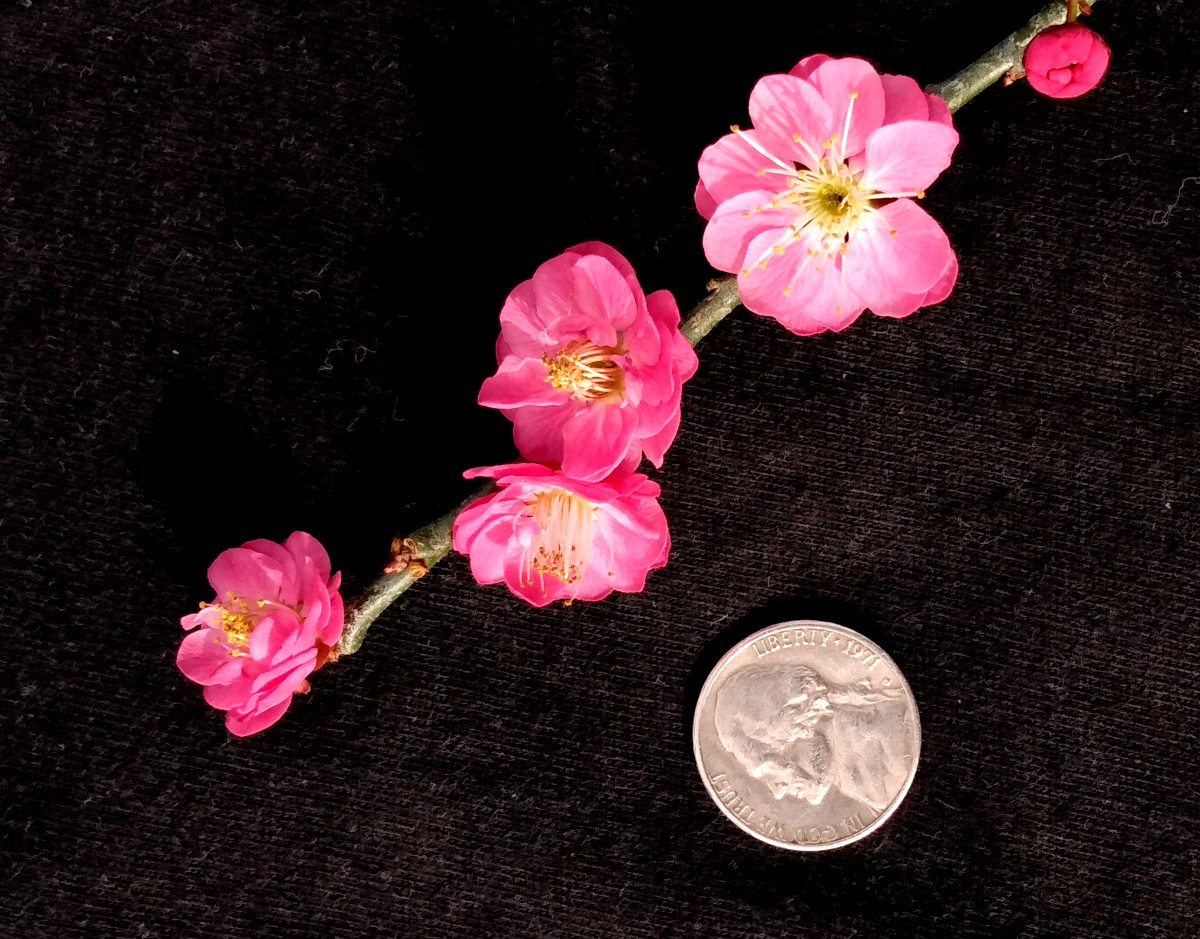
| 7743 Prunus mume 'Beni
chidori' [cuttings] Double flowers of an unusual very
bright pink color. FOUR INCH POTS $50 |
 |
|
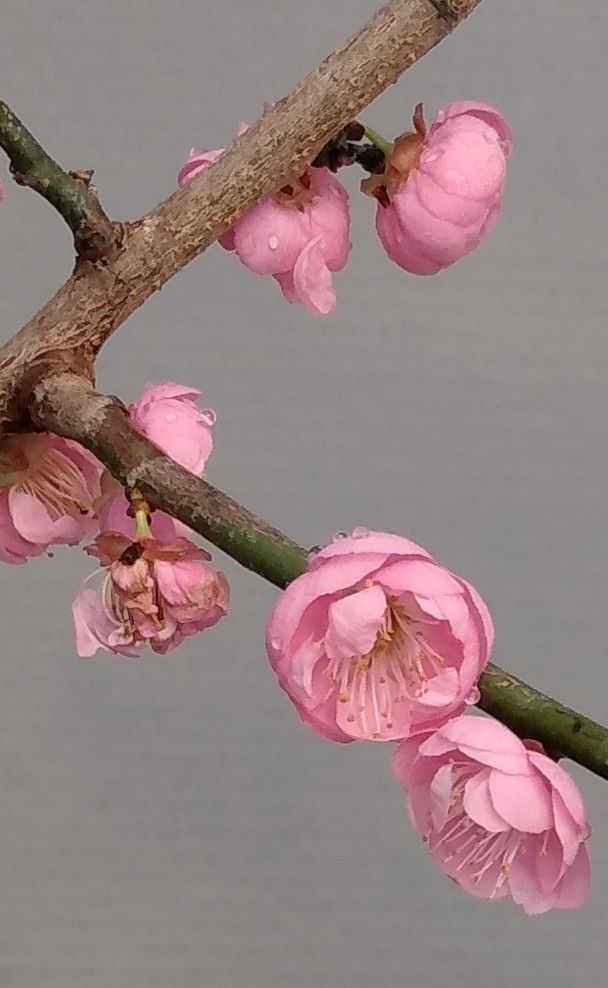
7745 Prunus mume 'Bonita'
[cuttings] Deep rose pink double flowers just a tad darker than
'Peggy Clarke', but not quite as dark as 'Dawn'. Flowers are
quite large, see comparison to a quarter in photo. Very strong
growing vigorous cultivar. |
 |
| 7746 Prunus mume 'Dawn'
[cuttings] Double pink flowers just a little paler than 'Peggy
Clarke'. 'Dawn' blooms a couple of weeks later than most mume, and
this may be the reason that for its slightly greater resistance to
spring freezing. See photo above. Sorry, Not Available |
| 7748 Prunus mume 'Hokkai
bungo' [cuttings] Double red flowers, reputed to be one of
the deepest shades of red on a weeping plant. The deep red color has
the hint of purple, whereas 'Matsubara Red' is more pure red. Like
most of the red mume, this is a weaker, slower growing tree. Don't
wait for these to become available before ordering or they will be
sold out. You can order immediately and schedule shipment after the
availability date. We don't charge you until shipment. Please see
the note above on the difficulty of growing the red flower forms. We
can assure you that you will receive live healthy plants, but their
survival after that is up to you. FOUR INCH POTS $50 ONE GALLON SIZE $75 |
G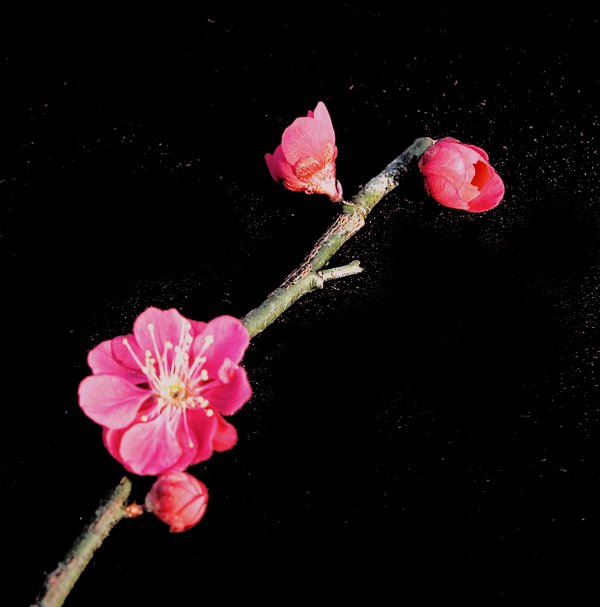 |
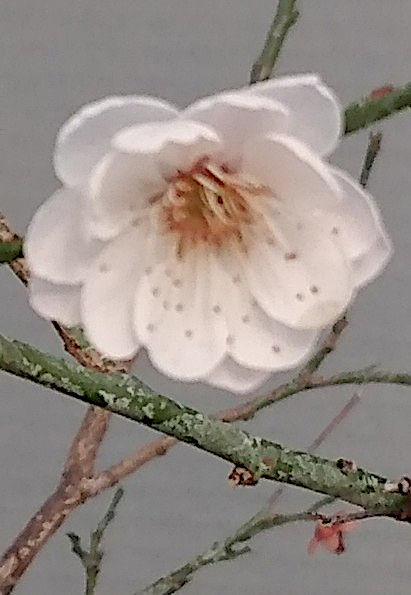
| 7749 Prunus mume 'Josephine'
[cuttings] A very hardy and floriflorus mume with small double
white flowers. There seems to be some discrepancy about this
cultivar. Some sources say the flowers are single pink, others say
double white. Our parent plant came from Heritage Seedlings,
usually a very reputable nursery and the flowers are white as
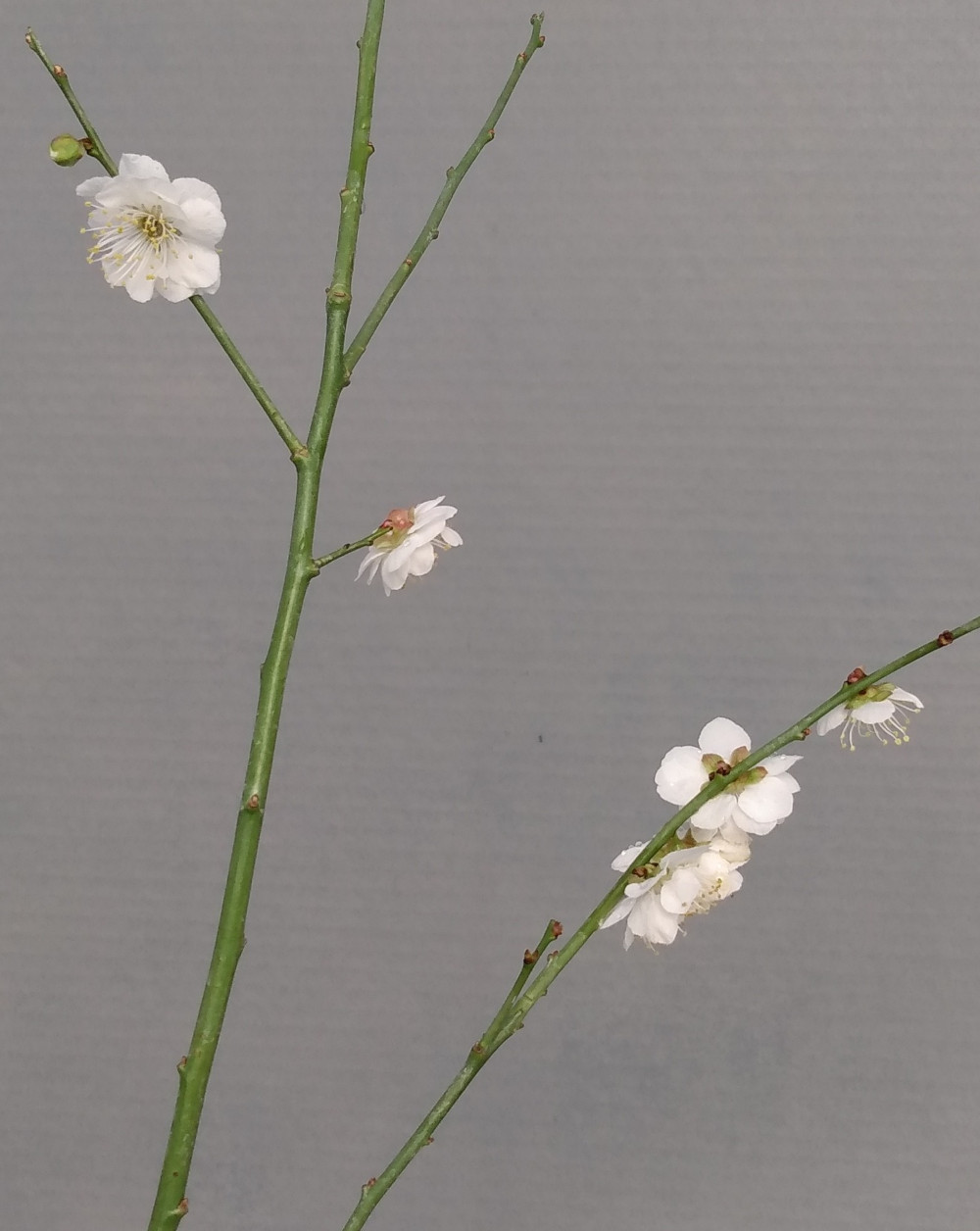
shown in the picture FOUR INCH POTS $50 |
 |
7750 Prunus mume 'Kobai'
[cuttings] Very deep double pink flowers, almost, but not quite pure red.
Vigorous upright grower.
FOUR INCH POT SIZE $50
ONE GALLON SIZE $75
|
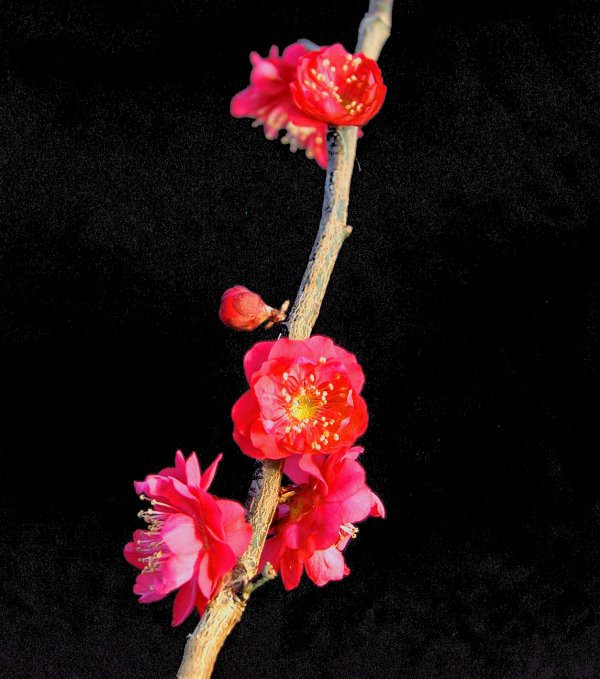
7760 Prunus mume 'Matsubara
Red' [cuttings] Smaller and slower growing than the other
cultivars. Very deep pure red double small flowers. One year
cuttings of this cultivar will be quite small due to its slow
growth, about 4 to 6 inches in 2 3/4 inch pots. 4 inch pots are
usually whips about 16 inches tall, pencil thick, and will be in
bloom Jan and Feb. Don't wait for these to become available before
ordering or they will be sold out. You can order immediately and
schedule shipment after the availability date. We don't charge you
until shipment. Please see the note above on the difficulty of
growing the red flower forms. We can assure you that you will
receive live healthy plants, but their survival after that is up
to you. |
 |
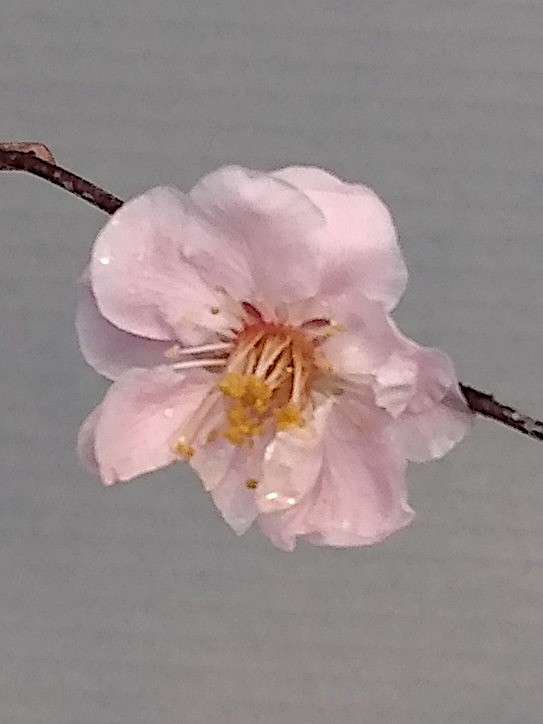
7766 Prunus mume 'Okitsu
akabana' [cuttings] Very large double light pink flowers.
Perhaps the largest flowers of any mume. Very vigorous growing to
20 to 30 feet. Blooms in late winter. |
 |
7767 Prunus mume 'Omoi-no-mama'
[cuttings]Multi colored pink and white flowers. That's the only
description I have right now. Am very anxious to see this one flower.
SORRY, NONE AVAILABLE
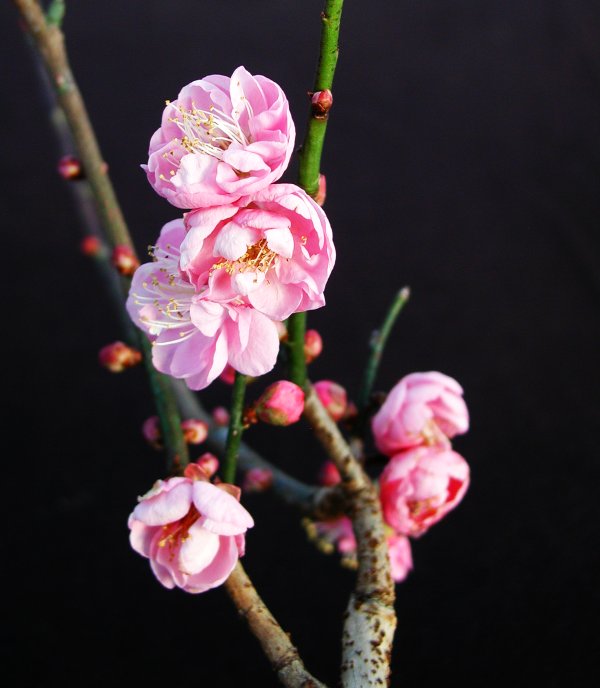
| 7770 Prunus
mume 'Peggy
Clarke' [cuttings] This is a nice medium pink double
flowered cultivar. By far one of the most popular. SORRY NONE AVAILABLE |
 |
| 7775 Prunus mume 'Trumpet'
[cuttings]Double pink flowers. Vigorous upright grower. Similar to
the other pink mume, but it flowers first of all the mume in our
nursery FOUR INCH POT SIZE $50 |
 |
7777 Prunus mume 'Une
....?' [cuttings] Dark double pink flowers. Vigorous upright
grower. Once upon a time we had an extensive collection of mume cultivars,
but lost most of them over the years due to our difficult spring climate.
This one survived, but somehow the last half of its tag was lost. I have
not been able to find a mume anywhere on the internet that has "Une" as
the first word of its name. If anyone knows of this cultivar, I would
greatly appreciate hearing from you. It's a wonderful cultivar and I hope
to post pictures of its flowers this year.
SORRY NONE AVAILABLE
| 7780Prunus
mume 'Rosemary
Clarke' [cuttings] Pure white double flowered cultivar.
One of the most popular. Strong grower. SORRY NONE AVAILABLE |
 |
| 7790 Prunus mume 'WB
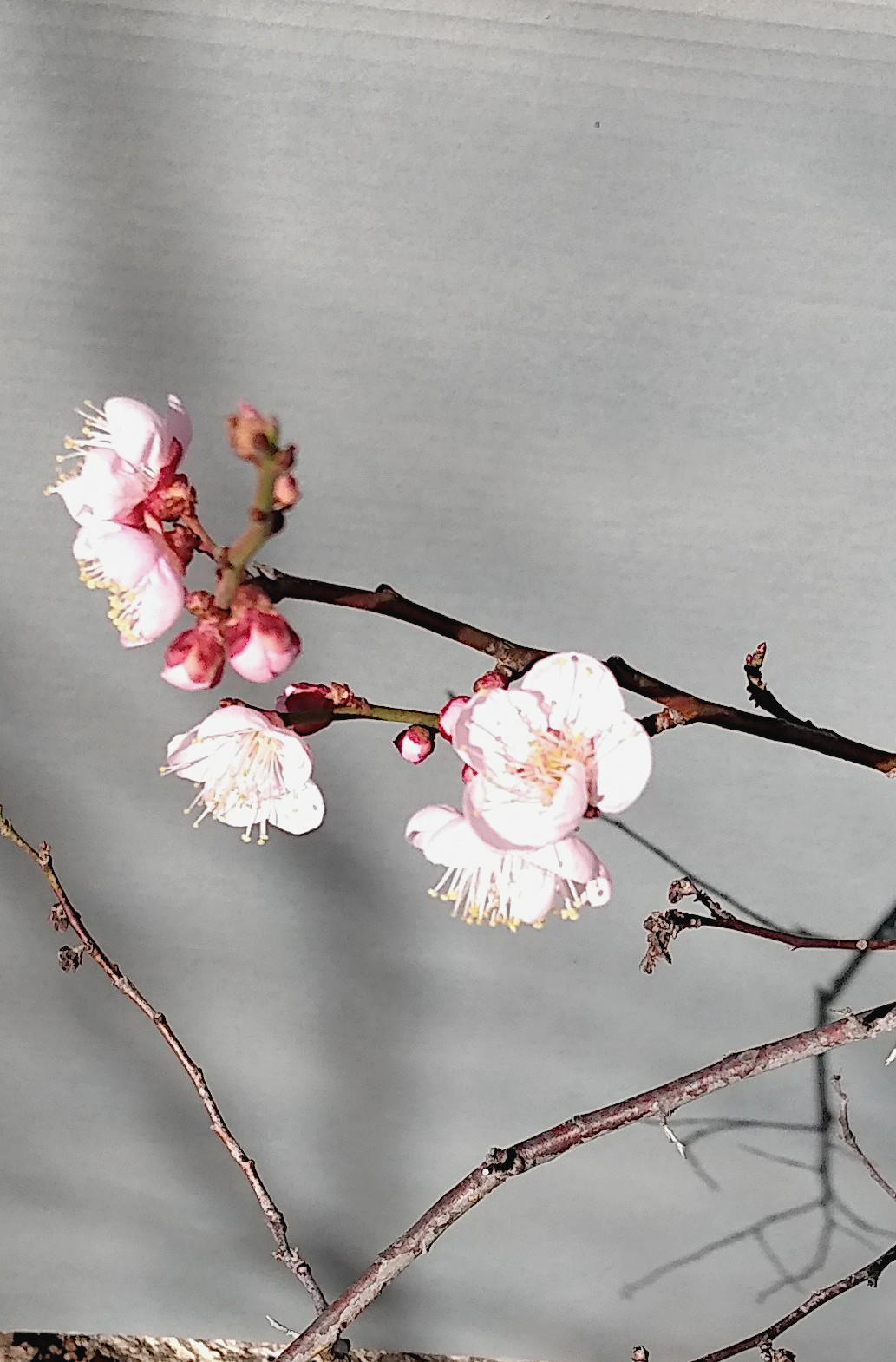
Clarke' [cuttings] Very similar to 'Peggy Clarke', but
with pronounced weeping branches. Sorry, Discontinued |
 |
7808 Pseudocydonia sinensis (Chinese Quince)
Small shrubby tree, semi evergreen with two inch glossy green thick
leaves. Fall color is showy red to yellow foliage. Vigorous grower forming
a large trunk rather quickly. One inch pale pink single flowers and two to
three inch yellow fruit (quinces). Cold hardy to zone 6. Excellent
traditional material for bonsai.
ONE GALLON SIZE $45
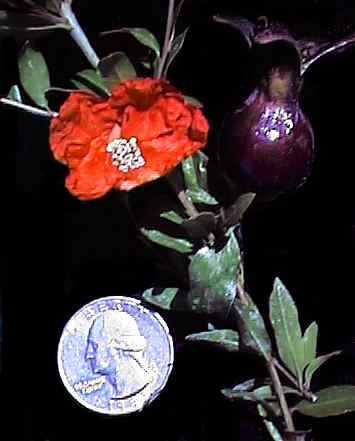
| Punica granatum (Flowering Pomegranate)S\M\D\10ø\Ls\B Deciduous shrubs or small trees from Asia. Full size Pomegranates will reach 10-15 feet and older plants can spread as far as 20 feet by long arching multiple trunks. It will be a multi-stemmed shrub unless a single trunk is selected and the suckers are pruned out. In any case, the number of trunks should be selected and maintained to develop a high canopy and open base which will accentuate the graceful arching habit. The flowers of all our large types are fully double (except 'Omi'), some as large as 4 inches. The colors are pure white, pale yellow, pink, red orange, red and two colored. Flowering period is from June-August except for the dwarf types that are nearly perpetually in bloom (and fruit). Most of the double flowering types do not fruit readily, which will be indicated for each variety. Small stem dieback will occur at 10ø but established plants will surely survive. At 0ø there is the risk of killing the entire plant. Younger plants, potted plants, and the dwarf types will need more protection (keep above about 20F). Pomegranates are very salt tolerant and heat tolerant. | 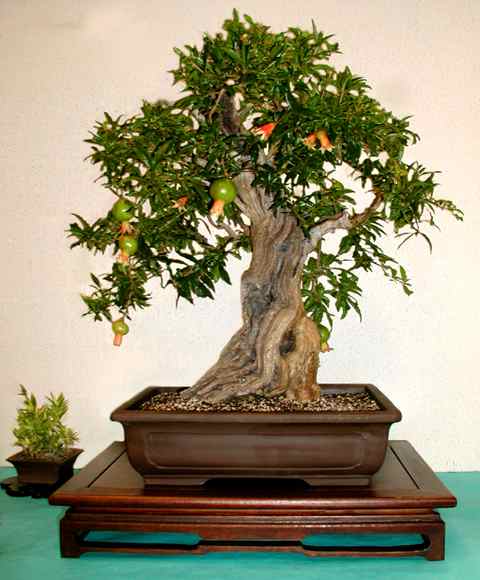 |
They thrive under desert conditions and are very drought resistant, although the fruit will suffer. They need full sun and prefer well drained soil, but will grow in almost any soil that does not stay too wet in summer.
Excellent plants for bonsai, forming thick tapered and sometimes twisted trunks. Full sized Pomegranate should only be used for larger bonsai (2-4 feet) to keep the flowers and fruit in proportion. This means growing them out for several years to develop sufficient trunk size. The dwarf types are suitable for small and very small bonsai, where their flowers and small fruit will be quite striking. Bonsai plants should be protected from temperatures below about 26F. They can be grown indoors in winter under bright lights, but it is not recommended. They do much better if given a dormant period in winter, even if it is a brief one in the fall before being moved indoors. All of our Pomegranates are cutting grown and ready to flower.
FULL SIZE POMEGRANATE
Most of these plants were originally imported from Japan and are very rare
in this country. We are one of the very few nurseries propagating these
cultivars.
7820 Punica granatum 'Hiza Kuro' Red ruffled
double flowered with very little orange cast. Closest to a pure red. Huge
flowers sometimes to four inches. Japan. Few or no fruit.
2 3/4 INCH POTS $18
FOUR INCH POTS $27
ONE GALLON SIZE $45
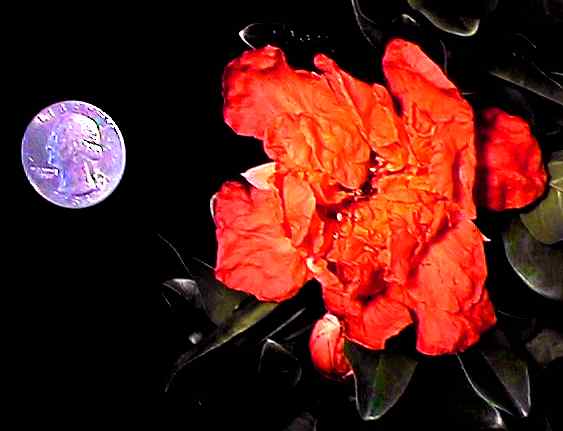
| 7825 Punica granatum 'Judai Zakuro'
A good solid red orange double flowered cultivar forming no fruit.
This one and 'Hiza Kuro' have the most saturated flower color of
any Punica we have seen. 2 3/4 INCH POTS $18 ONE GALLON SIZE $45 |
 |
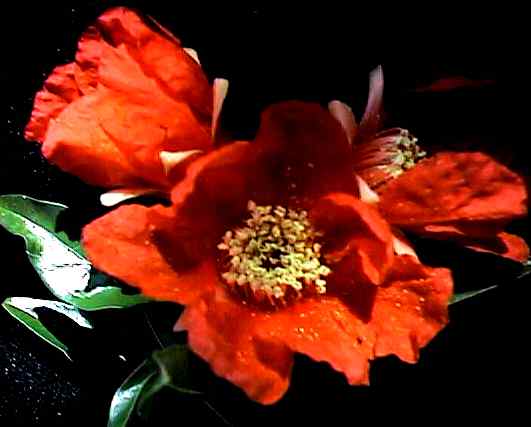
| 7830 Punica granatum 'Omi' Single
orange red flowers with very prominent yellow anthers. Sets lots
of delicious edible full size fruit. This is one the very best for
larger bonsai because its flowers do not overwhelm the plant and
fruit is assured. The sight of four inch pomegranates hanging form
a bonsai is truly spectacular. 2 3/4 INCH POTS $18 |
 |
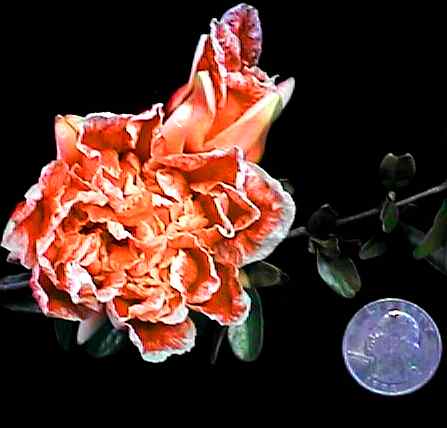
| 7835 Punica granatum 'Sarasa Shibori' Variegated
ruffled double. Paler orange red with creamy variegation on the
outer edge of the petals. Japan. Few or no fruit. 2 3/4 INCH POTS $18 FOUR INCH POTS $27 ONE GALLON SIZE $45 |
 |
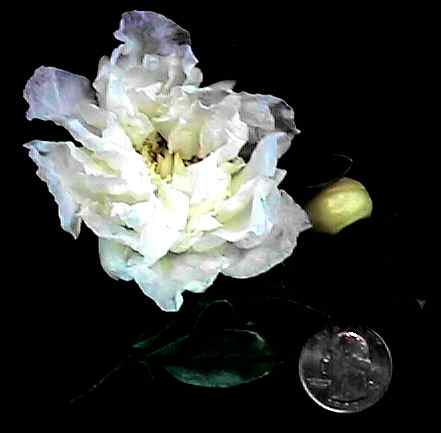
| 7840 Punica granatum 'Shirobotan' Pure
white double flowers. Japan. Few or no fruit, but when it does set
fruit, the pulp is also white rather than the normal purple. 2 3/4 INCH POTS $18 FOUR INCH POTS $27 ONE GALLON SIZE $45 |
 |
| 7845 Punica granatum 'Toyosho' Salmon
pink double flowers. Japan. Usually will set some smaller fruit,
about two or three inches in diameter. The flowers are also
somewhat smaller, about 1 1/2 to 2 inches making it suitable for
intermediate sized bonsai. FOUR INCH POTS $27 |
 |
DWARF AND SEMI-DWARF POMEGRANATE
We have discontinued Punica granatum 'Nana'because
of the confusion over the name. Many plants sold are actually seedlings of
dwarf plants that are quite variable, some of them even nearly full size.
We now only offer named cultivars that are cutting grown so that you may
be assured of the plant's characteristics.
7860 Punica granatum 'Evergreen's Red Dwarf'
This is a seedling selection introduced by our nursery that is a very
vigorous upright semi-dwarf to about five feet. It has single orange red
flowers and the same deep purple fruits as 'Emperor' except that they are
larger, up to 2 inches. We especially like this plant for bonsai because
it forms a large trunk quite quickly due to its rapid growth but it
retains the twigginess, flowers and fruit of the dwarf types. It is not
quite as free flowering as the smaller dwarf types, and has small thorns.
Our mother plant is over ten years old and has a 3 inch trunk at the base.
2 3/4 INCH POTS $18
7880 Pyracantha coccinea'Fiery Cascade'
(Firethorn) -10°F\S\M\Ls\B Evergreen shrub to about 8 feet. Orange
berries turning red. This is a nice smaller leafed Pyracantha
that will make small to medium size bonsai.
FOUR INCH POTS $27
ONE GALLON SIZE $45
7885 Pyracantha fortuneana'Mohave'
(Firethorn) -10°F\S\M\Ls\B Evergreen shrub to about 12 feet x 12 feet.
This is one of the cold hardiest Pyracantha. It has very flexible branches
making it useful for espalier or cascade bonsai. The berries color up
early in the fall and last through the winter. They are the darkest red
berry of all Pyracantha.
FOUR INCH POTS $27
ONE GALLON SIZE $45
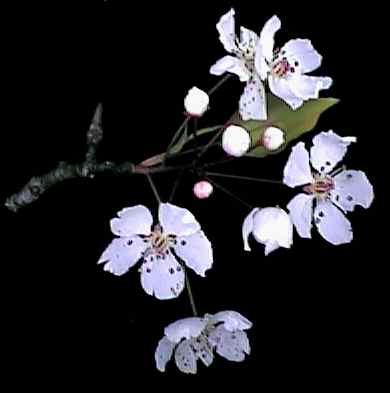
7900 Pyrus 'Kawakami' (Evergreen Pear) S\M\15°F\Ls\B Evergreen (partially deciduous in coldest areas) shrub or small tree. Drooping branchlets, shiny medium green leaves, clouds of creamy white flowers in late winter or early spring, just after mume. Sometimes forms small hard inedible green fruit. Without training it becomes large sprawling shrub. It is better used as a small tree by staking it up and selecting a single trunk. Quickly forms rough bark consisting of irregular oblong shaped plates which is quite attractive (see second photo). A quite tough little plant surviving adverse conditions of sun, little water, poor soil, but can only tolerate temperatures to 15F. It is also one of the few pears resistant to Fireblight. This plant has been overlooked for bonsai but would seem to have great potential. It is easily top and root pruned. The leaves do reduce somewhat and it develops characteristic bark fairly quickly. Cutting grown. 2 3/4 INCH POTS $18 |
 |
 |
7930 Pyrus calleryana (Gremel's
Pear) S\M\15°F\Ls\B There's a funny story behind this dwarf Asian
Pear. Jim Gremel purchased some'Toringo' crab seedlings from Lawyer
Nursery about a dozen years ago. He field grow these and they became a
dense thorny thicket, flowering after about eight years old. Strangely,
the small round 1/2 inch fruits never seemed to turn red. In any case,
they made some really handsome trunks and he eventually dug them up and
sold them as specimen'Toringo' crabs. And I bought one from him. The more
we looked at these 'crabs', the less sure we were that they were really Malus
sp.Eventually it dawned on us that the reason the 'apples' didn't
turn red was because they were pears! Jim offered everyone their money
back, but no one took him up on it, we all love our little Gremel Pears. I
helped him track down the probable species as either P. calleryana, or
P. ussuriensis. But neither of these species really fits these
wonderful little dwarf pears. The full size leaves are about 1 1/2 to 2
inches, but they dwarf nicely to about 1 inch. The plants are strong
growing, but leaves and internodes reduce nicely when they are
constrained. Fairly cold hardy and disease resistant. The little round
pears turn a greenish yellow when ripe and are a perfect size for shohin
or slightly larger bonsai. Our plants are all cutting grown from our
single tree, and are capable of flowering and fruiting immediately,
although typically it takes a few years of growing out before they bear.
2 3/4 INCH POTS $18
| Articles | Home Page | Images | Order Form | Plant Catalog |